Sep 22 2026
News from Kruse: September 2026
By Judy Knaak
I first volunteered at the Kruse House Garden last summer. I noticed as I was head down, digging in the dirt, the sound of a passing train. The tracks that run through town are just across the road from the Kruse House behind the stores along Main Street. The familiar train whistle and clickety clack brought to mind that Celia Kruse must have heard the same sounds as she gardened. I would like to take a moment to reflect on the first gardeners at the Kruse House and perhaps notice similarities to our present day garden club workers.
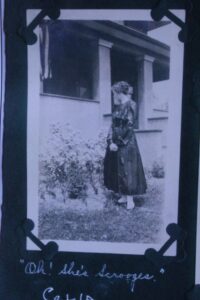 Celia Kruse was 21 years old when her parents Fred and Bertha built their « modern » house in 1917 at 527 Main Street. Celia’s maternal grandparents lived in a house just to the west. Their five daughters included Bertha and her family in today’s Kruse House on one side, and Amelia and her family in the house on the other side of the grandparents. It was very common in 1917 for extended family members to live so close to each other. Three daughters remained unmarried and also lived in those homes. The backyards of the three houses created one expansive area which the women of the family took on as a gardening project. Over the years Celia and her grandmother, her mother and her four aunts worked diligently to transform a huge plot into spectacular gardens. It is said that they grew hundreds of tulips and particularly loved dahlias. The Kruse House had the largest back yard of the three homes and in the beginning extended all the way up the hill to Colford Avenue.
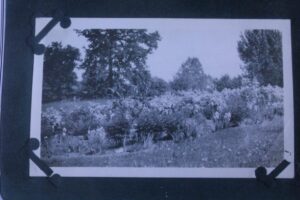
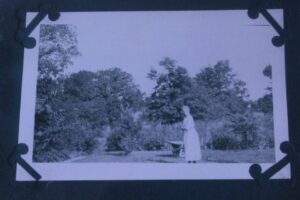 Rock gardening was popular at the turn of the 20th century and Celia and her mother decided to take on that challenge. You can still see the rocks that line the border of the gardens along the back of the yard. If you venture into the garden to pull weeds, you discover yet more rocks. Celia’s family would take trips to visit family in Wisconsin and brought back rocks and woodland plants to add to their gardening endeavors.
 Celia chose a career as a stenographer after high school and took the train into Chicago to her job at an office. When her father died of a heart attack in 1933, Celia became the sole bread winner for the family. She never married and continued her employment and financial support for her home. Yet her love of gardening was always at the center of her personal life. It is said that after work she would change her clothes, grab her tools and spend time in the gardens before the daylight faded. Does that sound like the routine of some of our club members? Celia’s garden clothes consisted of a long black dress covered by a white or denim apron and often a floppy sun hat on her head.
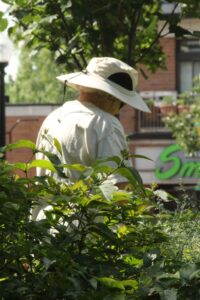
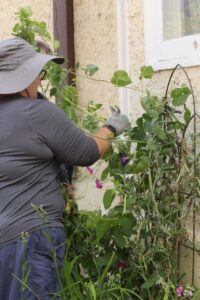 These photos show some of the garden club volunteers carrying on the work of the first gardeners, some with their own floppy hats. No long dresses though! The similarities of our volunteer gardeners with the ones who began turning the soil into floral majesty over 100 years ago goes beyond the sound of train whistles. Celia and her family would ponder over the tasks of tending, planting and pruning, creating a special bond between them. Our volunteers do the same. As all gardeners know, as you work the land, dig the dirt and strive to make it better, you develop a love for that particular plot of earth. The Kruse women knew it. We do as well.
 To learn more about the history of the Kruse family and their home, please take a tour of the house offered on select Saturdays from noon to three. The gardens are available at any time for respectful admiration.
 Standing behind the house, you may picture the grounds as Celia once did. There was a path along the eastern edge of the yard that ran from Colford Avenue down to Main Street. The neighborhood kids could follow that path, past Celia’s little barking dog, to buy a loaf of bread at White’s Grocery Store next door to the Kruse House. In your mind’s eye, imagine all of the commercial development on Main Street was once a neighborhood of houses, probably workers for the railroad as most of the town’s men were employed. Take away the traffic, the stores and the hustle and bustle of today to see a peaceful residential community. The Kruse House is the last remaining reminder of that era. Our organization strives to preserve the beauty and tranquility that the first gardeners created . . . with the sounds of the trains a perpetual backdrop.
Information and archived photos included here from the generous sharing of resources from Susan Terronez, historian for the West Chicago Historical Society, caretakers of the Kruse House Museum since 1975.
No responses yet
Leave a Reply
You must be logged in to post a comment.
 - Membership