Mar
19
2026
By Barbara Darrah
It’s a little difficult to write about Kruse this week. I’ve been out of the country for a week. When I left, the temperature was in the sixties. The daffodils were bursting out of the ground. Now they are covered with snow and it is well below freezing. Well, that is spring in the Midwest.
In Istanbul, it was early spring, but they had canceled their tulip festival and everything in the palace gardens was BIG – grasses, trees and ponds – so I am still missing our small ponds and flower filled borders.
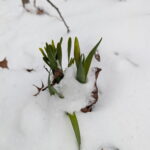 During the last few weeks, the Kruse crew has met for coffee and discussions of this year’s plans. Because so many of us were traveling in March, we decided to postpone spring cleanup. What a good idea since everything is now covered with snow. However we will be back in April so if you have an hour or two on a Wednesday or Saturday morning, we would love to have you join us.
Feb
23
2026
By Christina Covarrubias
A February garden in West Chicago should be difficult to discuss. However when you find a weekend with 50-60 degree temperatures it’s easy to survey the garden and take time to admire the winter landscape. Sadly, no early spring bulbs or ephemerals were popping up despite the unseasonable weather.
The Kruse garden, at 527 Main Street, belongs to the original house built in 1917 and presumably the garden dates back closely to that time. Past Kruse garden volunteers describe uncovering stone paths buried in layers of soil, digging a hole to find the hole belonging to the goldfish pond (though we don’t keep goldfish)and explained the north hillside was originally a rock garden. This long established garden offers visual interest in hardscaping, mature trees and perennials left standing from the past season.
As always you are welcome to walk around the garden any day of the week; parking behind the garage. You are also welcome help garden with our wonderful Kruse crew starting in April on Wednesdays from 9-11:30am or the Second Saturday of every month from 9-11:30am. Commitment to come every time is NOT required to join the fun.


Jan
14
2026
By Kerry Perry
The garden was put to bed in late fall. Not much was cut back as we wanted to protect the habitat for overwintering bees and other insects. There was a beautiful blanket of snow a few weeks ago and I only wish it had stayed longer. The recent warm weather brought immediate melting and now the yard is brown and somewhat dull. But, ahhh…the anticipation of spring! We’ll be ready and waiting for new growth.
“The tiny seed knew that in order to grow, it needed to be dropped in dirt, covered in darkness, and struggle to reach the light.” – Sandra Kring

Several Snowdrops Galanthus woronowii bulbs were planted in the far NE sec�on of the garden. They will be among the first flowers peeking their heads out of the snow in early spring.
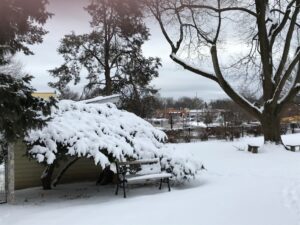
One of my favorite photos is of the bench by the garden shed and the old maple in the background. It looks so peaceful, tranquil and pure.
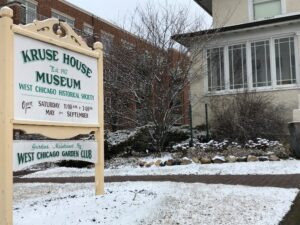
Join the Kruse Crew Wednesday mornings, generally April through October. It’s a fun learning experience and you have the opportunity to get your hands dirty.
 - Membership